NPS form
NPS form builder that pairs every score with the reason behind it
Ask the 0–10 question, add a follow-up that changes with the score, and share the form by link, email, or embed. AI then groups what promoters, passives, and detractors say.



Survey types
The NPS form for every point where loyalty is decided
One NPS form builder covers relationship rounds, transactional check-ins after a purchase or ticket, and employee NPS surveys.
For relationship NPS
Ask your whole customer base how likely they are to recommend you, on a schedule, and read what promoters and detractors say each round.
Use template
For transactional NPS
Send the 0–10 question right after a purchase, a delivery, or a closed support ticket, while the experience is still fresh.
Use template
For employee NPS
Ask employees how likely they are to recommend your company as a place to work, then follow up on what they would change first and why.
Use template
No-code builder
Set up an NPS form in one sitting, no developer needed
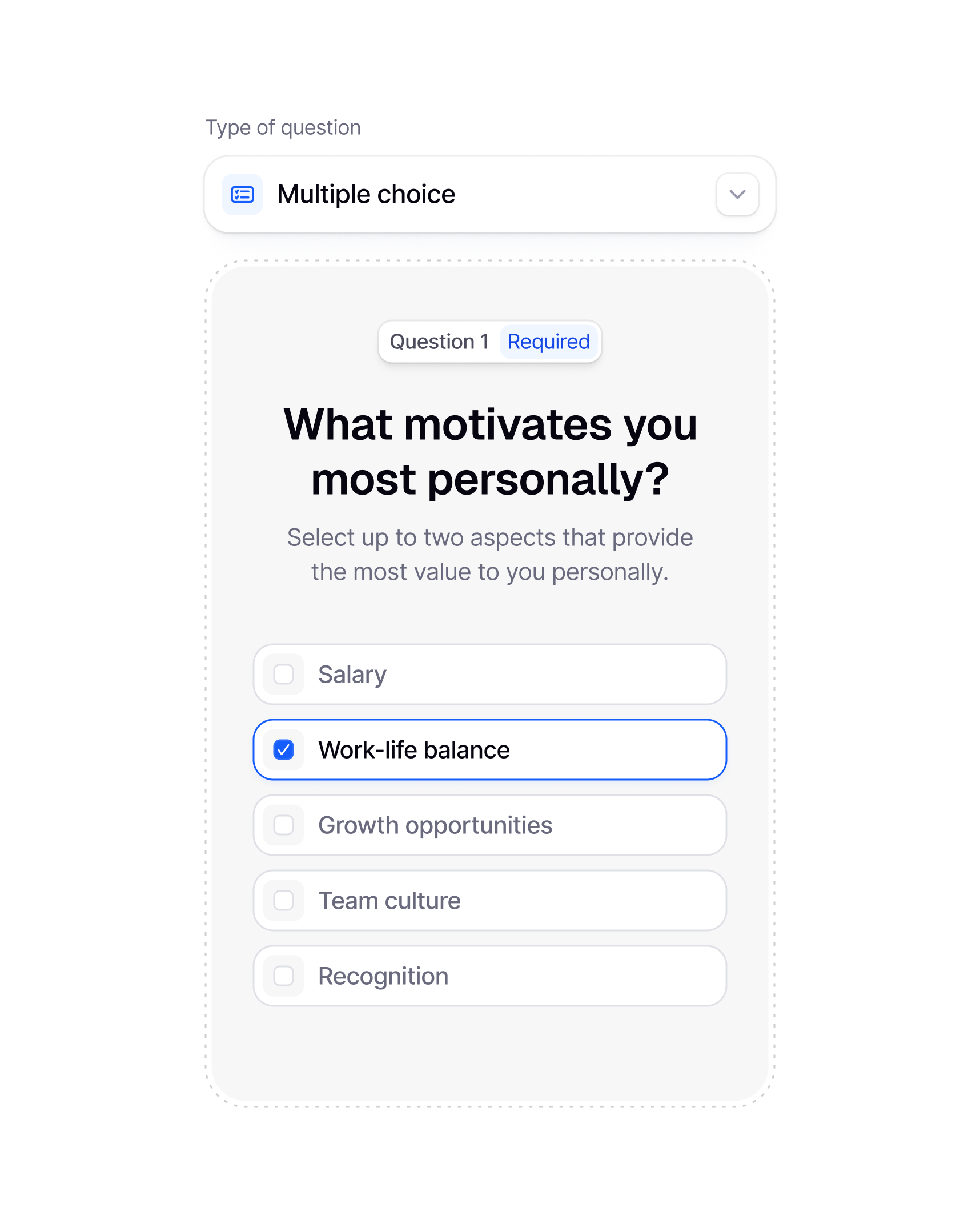
Drop in the 0–10 question, write the follow-up, pick a layout, add your logo, and preview the whole NPS form as a respondent before anyone sees it.
An NPS form needs only three screens: the 0–10 question, an open follow-up, and a thank-you ending. Add one more question for context if you want it, then publish. You never touch code or a spreadsheet.

Customization
An NPS form that looks like it came from you
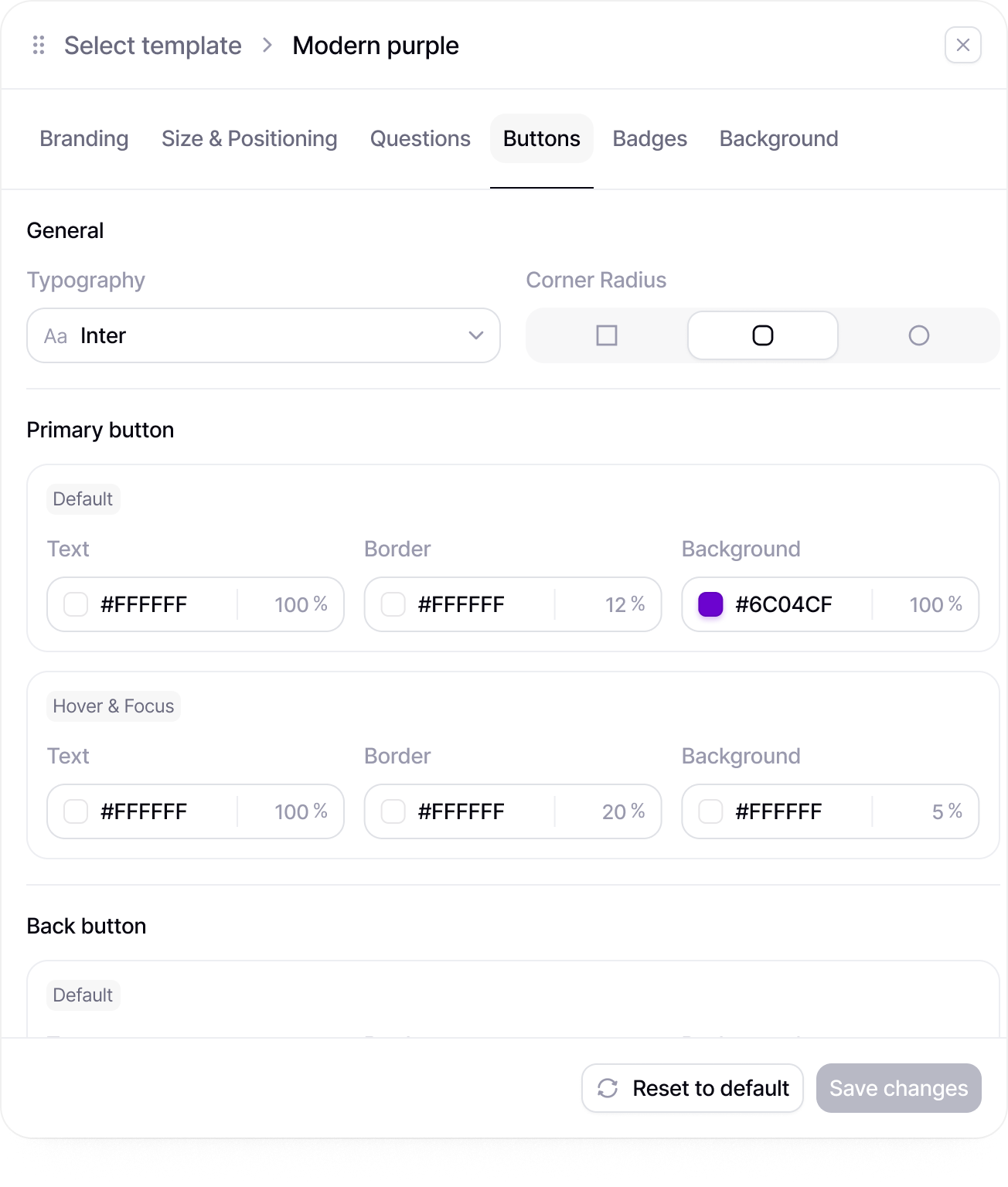
Style the 0–10 scale, the follow-up screen, and the ending with your colors, fonts, logo, and images so the NPS form reads as part of your product.
Pick a theme when you need the form out today, or set each screen's layout and images yourself. Give promoters and detractors their own end screens, each with a message that fits the score, and keep the buttons in your brand color throughout.
Survey templates
Skip the blank page with an NPS template
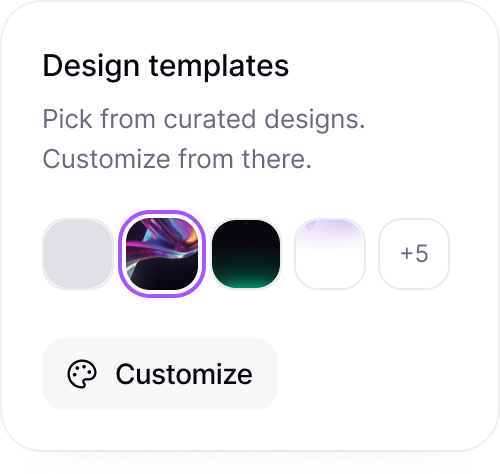
Open an NPS template, change the wording to match your product, add your branding, and the form is ready to share.
Each template already holds the 0–10 question and a follow-up. Swap in your wording for a loyalty round, a post-ticket check-in, or an employee survey, and it is ready to send the same day.


Security
Keep every NPS score in one workspace
Scores and follow-up comments land in one workspace, so support, product, and leadership read the same NPS data.
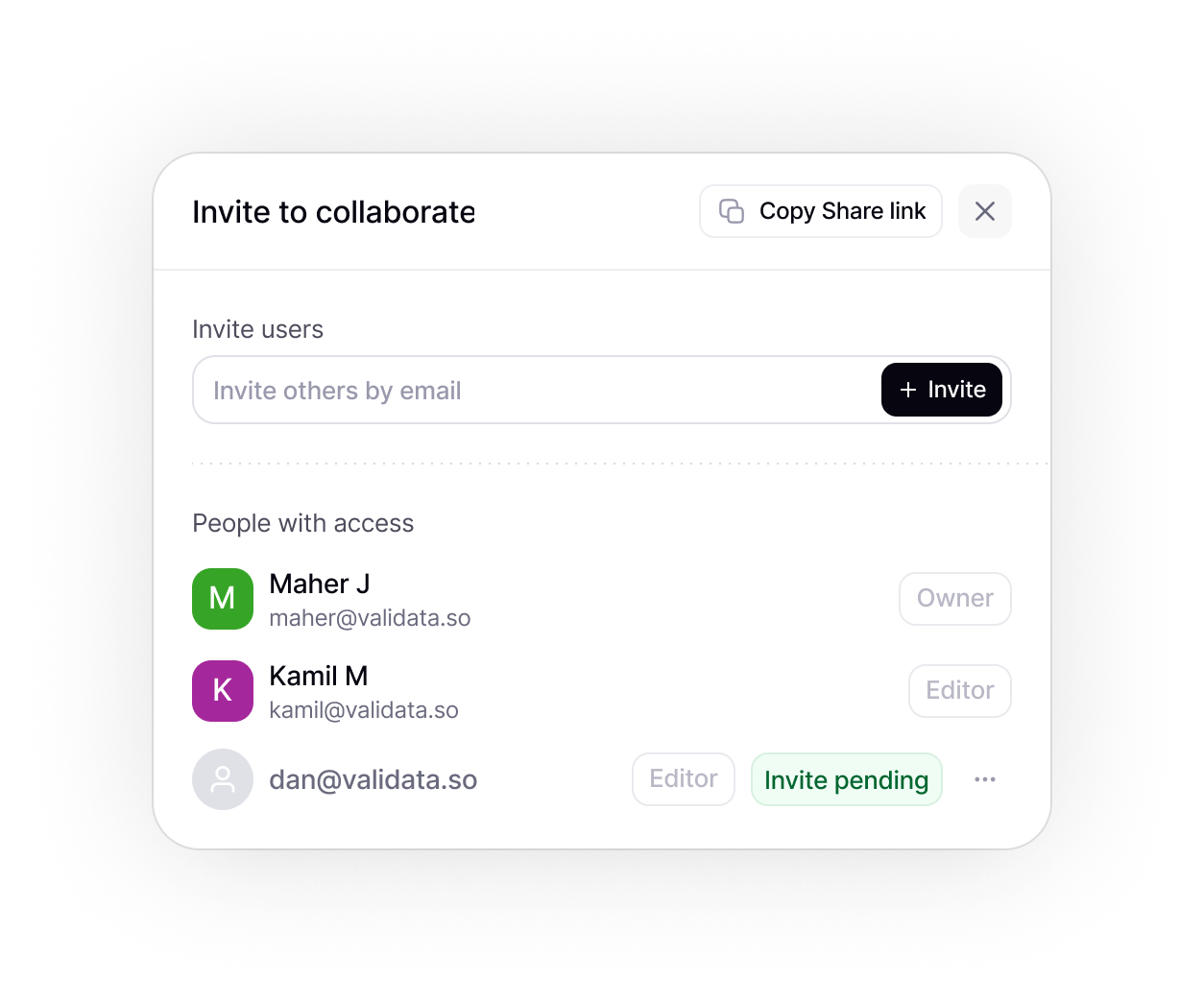
Set who can edit the NPS form and who can only read results. Past rounds sit next to the current one, so nobody hunts for an old export or emails a spreadsheet around.
Collaboration
Review the NPS form before it goes out
Support, product, and marketing open the same NPS form, try the follow-up paths, and agree on wording and send date.
Support usually owns the question, marketing the design, and a team lead the timing. Validata keeps all three on one survey rather than a chain of screenshots and comments.

Slack
Send new response alerts to Slack
Every new survey response can trigger a Slack notification, so your team sees new feedback without checking the dashboard.
Share low completion warnings
Alert your team when survey completion drops below a selected threshold.
Send campaign launch updates
Post a Slack update when a new survey email campaign is sent through Mailchimp.
Notify the team when a survey is completed
Send a message to your team when a respondent finishes the survey.
Response tracking
Watch scores land while the NPS form is still open
See scores arrive in real time, along with completion rate, where people drop off, and how many skip the follow-up, while the NPS form is still live.
If most people answer the 0–10 question and then leave, shorten or reword the follow-up. Open any single response, filter by promoters, passives, or detractors, and edit the form without stopping the round.
Integrations
Connect your tools
Send data where it matters. Integrate with Sheets, Notion, Slack, and 100+ apps via Zapier.
Slack
Slack
Send new response alerts to Slack
Every new survey response can trigger a Slack notification, so your team sees new feedback without checking the dashboard.
Share low completion warnings
Alert your team when survey completion drops below a selected threshold.
Send campaign launch updates
Post a Slack update when a new survey email campaign is sent through Mailchimp.
Notify the team when a survey is completed
Send a message to your team when a respondent finishes the survey.
Zapier
Zapier
Connect survey responses to your tools
Use Zapier to send new survey responses to the apps your team already uses.

Create tasks after new submissions
Automatically create a task or database item when a new response is submitted.
Save files to cloud storage
Automatically save exports, attachments, or uploaded files to your preferred storage tool.
Add respondents to mailing lists
Send respondents into the right Mailchimp audience after they complete a survey.
Google Drive
Google Drive
Save survey exports to Google Drive
Store CSV, PDF, or spreadsheet exports in a selected Google Drive folder.
Keep uploaded files organized
Save respondent uploads and survey files in one shared Drive location.
Share survey assets with the team
Send a Slack message when new survey files are added to Google Drive.
Store campaign materials
Keep email assets, survey links, and campaign files organized in Drive.
Dropbox
Dropbox
Back up survey exports to Dropbox
Automatically save exported survey files to a selected Dropbox folder.
Organize project folders automatically
Create or update Dropbox folders when a new survey project is created.
Share files with stakeholders
Notify a Slack channel when new survey files are available in Dropbox.
Store respondent uploads
Send uploaded files from survey responses directly to Dropbox.
ChatGPT
ChatGPT
Draft follow-up emails from responses
Use respondent answers to generate personalized follow-up emails after the survey is completed.
Personalize respondent communication
Adapt email copy, reminders, or next-step messages based on selected answers or respondent details.
Write reply drafts for specific feedback
Turn individual survey responses into ready-to-send reply drafts for your team to review.
Create thank-you messages for respondents
Generate custom thank-you messages based on how someone answered the survey.
Mailchimp
Mailchimp
Add respondents to Mailchimp
Send completed survey respondents to a selected Mailchimp audience.
Trigger follow-up emails
Start an email sequence after someone completes your survey.
Send survey invitations
Distribute survey links to selected audiences directly through Mailchimp campaigns.
Segment contacts by response
Group respondents based on selected answers, scores, or form fields.
Google Sheets
Google Sheets
Save responses in Google Sheets
Every new survey response is automatically added to a Google Sheet for easy analysis and reporting.
Update team trackers
Notify your team when a shared response tracker receives new submissions.
Sync response data for operations
Send survey data into operational spreadsheets used by sales, research, or support teams.
Keep live response records
Maintain a live spreadsheet with respondent details, answers, and submission time.
Notion
Notion
Save responses to Notion
Send new survey responses into a Notion database for easy organization.
Create feedback records
Turn each submitted response into a structured feedback item in Notion.
Track research projects
Link survey files, project notes, and response exports inside your Notion workspace.
Notify teams about new entries
Send a Slack update when a new survey response is added to a Notion database.
+100
more intergrations
Survey types
Three NPS templates ready to send
Each template comes with the 0–10 question and a follow-up already in place. Change the wording, add your logo, and share it the same day.
Relationship NPS survey template
The classic 0–10 question with a follow-up for every score band, ready for a quarterly or twice-yearly round to your whole customer base.
Try template
Transactional NPS survey template
Ask for a score right after a purchase, delivery, or support ticket, with one follow-up question.
Try template
Employee NPS survey template
Ask staff how likely they are to recommend your company as a place to work.
Try template
FAQ
Frequently Asked Questions
What Validata does differently, and what that means for your team.
An NPS form asks one question on a 0–10 scale: how likely are you to recommend us? An open follow-up usually asks why. Scores of 9 and 10 count as promoters, 7 and 8 as passives, and 0 to 6 as detractors.
Subtract the percentage of detractors (0–6) from the percentage of promoters (9–10). Passives (7–8) count toward the total but not either side. The result runs from -100 to 100.
Keep it open and tied to the score. Ask promoters what they value most, detractors what went wrong, and passives what would move them to a 9 or 10. With Validata you can show a different follow-up for each score band.
Yes. Validata is free to start. Build the NPS form with the 0–10 question and a follow-up, add your branding, and share it by link, email, embed, or QR code to begin collecting scores. Responses show up in the workspace as they arrive.
A relationship NPS goes out on a fixed schedule, such as every quarter, to your whole customer base. A transactional NPS goes out right after a purchase, delivery, or support ticket. Validata can schedule either.
Yes. Conditional logic sends promoters, passives, and detractors to different follow-ups and end screens. Ask a detractor what went wrong and a promoter what to keep.
Yes. Set your own colors, fonts, and logo, add images, and design the welcome and end screens. You can also reword the 0–10 question so the form sounds like your company.
AI groups the follow-up answers into themes and shows which come from promoters, passives, or detractors. Each insight keeps its responses and a confidence score.
Yes. Embed the NPS form on a page in your product or website, or send it by link or email. A QR code works on packaging or receipts. Every channel feeds the same workspace, so embed and email scores land in one place.
Yes. Connect the NPS form to Google Sheets, HubSpot, Slack, Notion, Mailchimp, and similar tools. New scores and comments arrive where your team already works, and you can set up automated follow-ups from there.

You’ve used forms before.
Now use insight.
You don’t need another tool for collecting responses you need a smarter way to understand what they actually mean.